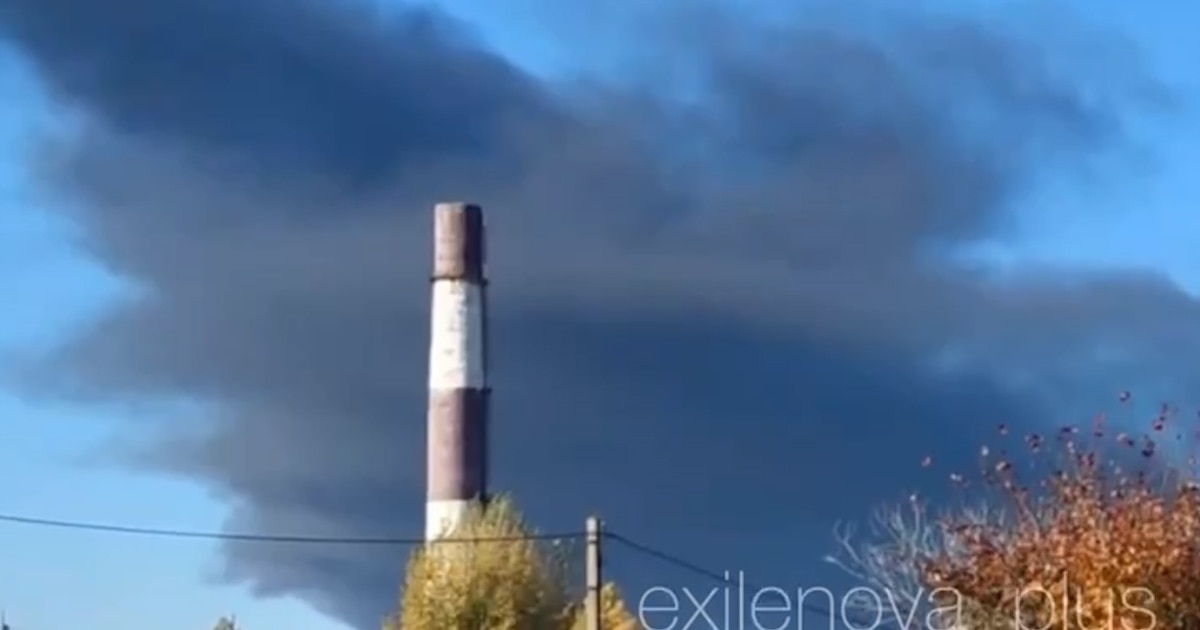
Russia's Fuel Crisis Deepens: 17% Oil Refinery Capacity Lost Amid Escalating Drone Attacks
Recent months have seen a dramatic escalation in drone attacks targeting Russia's vital oil refinery infrastructure, plunging the nation into an increasingly severe fuel crisis. With an estimated 17% of refining capacity now reportedly offline, equating to 1.1 million barrels per day, the impact is rippling through both Russia's economy and its military logistics. These persistent strikes, often referred to in Russian media as "атака дронов НПЗ" (drone attack on oil refineries), are proving to be a highly effective strategy, exposing vulnerabilities and creating significant domestic challenges for the Kremlin.
The scale of these operations is unprecedented, with Ukraine leveraging increasingly sophisticated and long-range unmanned aerial vehicles (UAVs) to strike deep within Russian territory. While official Russian sources often claim high interception rates and minimal damage, independent analysis and visual evidence frequently contradict these narratives, revealing significant fires and operational disruptions at targeted facilities. The implications extend far beyond mere property damage, touching upon export revenues, domestic fuel availability, and the operational capacity of the Russian Armed Forces.
Unpacking the Scale and Impact of Recent Strikes
The night of September 12, 2025, marked a pivotal moment, with Russia experiencing one of its most extensive drone assaults to date. The Russian Ministry of Defense reported an astonishing 221 "intercepted" UAVs across more than a dozen regions, including critical industrial hubs like Bryansk, Smolensk, and Leningrad oblasts. Yet, satellite imagery and local reports from areas such as Primorsk and Smolensk, specifically at the "Kardymovo" oil depot near Smolensk (belonging to Lukoil), showed significant fires and damage, directly contradicting official claims of no destruction.
Further exacerbating the situation, a separate wave of attacks on February 17, 2024, targeted key installations, notably the Ilsky Oil Refinery in Russia's Krasnodar Krai. Local residents reported a series of over ten explosions, followed by a large-scale blaze that engulfed a significant portion of the refinery, damaging a crucial oil product reservoir and covering an area of approximately 700 square meters. These incidents collectively underscore a growing capability to penetrate Russian airspace and inflict substantial damage on strategic assets.
The geographic spread of these attacks is also notable, demonstrating the evolving range of Ukrainian drones. From the immediate border regions to facilities deep within Russia, including Moscow, the strikes have created a wide defensive perimeter that Russia's air defense systems are struggling to cover comprehensively. This forces Russia to divert valuable resources, including advanced air defense systems, away from the front lines to protect its domestic infrastructure, creating a strategic dilemma.
Economic Fallout: Fuel Shortages and Export Disruptions
The strategic targeting of Russian oil refineries has triggered a profound crisis within Russia's fuel sector. Anton Zemlyanoy, a senior analyst at the Ukrainian Centre for Security and Cooperation, highlights the direct correlation between these attacks and the current state of affairs. According to his analysis, roughly 14 refineries have been hit by drones over a 30-day period, resulting in the aforementioned 17% loss of refining capacity. This loss directly translates into a deficit of gasoline and diesel, impacting at least 20 Russian regions.
- Domestic Fuel Shortages: The immediate consequence is a scarcity of petroleum products for domestic consumption. This not only causes inconvenience for citizens but also threatens to inflate prices, potentially leading to social unrest and discontent at a time when the Kremlin seeks stability.
- Reduced Export Revenues: Russia's oil and gas sector remains the cornerstone of its export earnings, crucial for funding its military operations. By crippling refining capacity, these attacks diminish Russia's ability to process crude oil into more valuable refined products like gasoline, diesel, and jet fuel for export. This reduction in higher-value exports directly impacts the nation's foreign currency reserves and overall economic stability, which are already strained by international sanctions.
- Global Market Implications: While the primary impact is on Russia, a significant disruption to Russian refined product exports could have ripple effects on global energy markets, particularly for countries that still rely on Russian supplies. This adds another layer of complexity to the already volatile international energy landscape.
- Investment and Maintenance Challenges: Beyond direct damage, the continuous threat discourages investment in refinery upgrades and maintenance. Insurance costs skyrocket, and the availability of specialized foreign equipment and expertise is limited due to sanctions, further complicating recovery and long-term operational sustainability.
As Zemlyanoy emphasizes, "UAV strikes on the oil and gas sector are, first and foremost, a blow to the Russian economy. This concerns both oil and gas exports and domestic fuel consumption." This dual impact makes the refinery attacks a highly effective economic weapon.
Impact on Military Logistics and War Machine
While the immediate impact on the Russian army's fuel supply at the front lines may not yet be "critical," the sustained drone campaign is undeniably creating significant logistical headaches for the aggressor state. The Russian military relies heavily on road transport for resupplying its forces, particularly in southern Ukraine. Disruptions to fuel availability and distribution networks directly translate into delays and increased costs for military operations.
The complexity of supplying a large-scale military operation requires a robust and uninterrupted flow of fuel, from production facilities to frontline depots. When refineries are damaged, the entire supply chain is affected:
- Longer Supply Routes: Damaged refineries necessitate sourcing fuel from more distant facilities, increasing transportation times and costs.
- Increased Vulnerability: Longer supply lines are inherently more vulnerable to interdiction, either through direct attacks on transport convoys or through continued pressure on railway infrastructure.
- Resource Diversion: The need to repair damaged facilities and protect remaining ones diverts critical resources, including personnel, equipment, and finances, away from other military priorities.
- Quality Control Issues: A stressed supply chain can lead to compromises in fuel quality, potentially impacting vehicle performance and operational readiness.
The attacks on refineries are a strategic move to complicate Russia's ability to sustain its war effort, forcing it to expend resources and effort on domestic defense rather than offensive operations. For more on this critical aspect, explore Ukraine's Drone Strikes: Impact on Russia's Oil & War Logistics.
The Strategic Long Game: Weakening Russia's Foundation
The systematic targeting of Russian oil refineries represents a calculated and evolving strategy. By focusing on an industry that is both the lifeblood of Russia's economy and integral to its military machine, Ukraine is applying pressure where it hurts most. The increasing range of Ukrainian drones, coupled with advanced targeting capabilities, suggests a long-term campaign aimed at eroding Russia's economic and military capabilities from within.
The prospect of Ukrainian drones reaching facilities deep in Siberia, as analysts suggest, could further compound Russia's woes. Such strikes would not only extend the geographical reach of the threat but also target some of Russia's largest and most crucial refining complexes, potentially leading to even more significant capacity losses and a widespread, systemic crisis.
For Russia, defending its vast and dispersed energy infrastructure against a persistent and innovative drone threat is an immense challenge. The sheer number of potential targets, coupled with the need to protect other critical infrastructure, stretches Russia's air defense capabilities thin. This ongoing vulnerability highlights a critical strategic weakness that Ukraine continues to exploit with increasing effectiveness.
Conclusion
The escalating drone attacks on Russian oil refineries, prominently featuring the "атака дронов НПЗ" keyword in reports, have undeniably inflicted substantial damage, leading to a significant loss of refining capacity and a deepening fuel crisis across Russia. From economic destabilization through reduced export revenues and domestic shortages to tangible disruptions in military logistics, these strikes are hitting at the very foundation of Russia's ability to wage war and sustain its economy. As Ukraine continues to innovate its drone technology and tactics, the pressure on Russia's energy sector is set to intensify, promising a challenging and uncertain future for the Kremlin as it grapples with profound internal vulnerabilities.